The Science Behind Sustainable Packaging: How 3D Printed Packaging Makes a Difference
Sustainability has become a major focus for businesses and consumers alike. As environmental concerns continue to shape purchasing decisions, companies are actively seeking innovative ways to reduce waste and minimize their ecological footprint. One of the most exciting developments in the packaging industry is 3D printed packaging, a technology that combines customization, efficiency, and sustainability.
While traditional packaging methods often involve material waste, large production runs, and complex manufacturing processes, 3D printing offers a smarter approach. By producing packaging with precision and flexibility, businesses can significantly reduce resource consumption while meeting evolving customer expectations.
In this article, we’ll explore the science behind sustainable packaging and how 3D printed packaging is helping create a more environmentally responsible future.
Understanding Sustainable Packaging
Sustainable packaging refers to packaging solutions designed to minimize environmental impact throughout their lifecycle. This includes:
- Reducing material usage
- Lowering carbon emissions
- Using recyclable or biodegradable materials
- Minimizing production waste
- Improving transportation efficiency
The goal is to protect products effectively while conserving resources and reducing environmental harm.
As businesses move toward greener operations, innovative technologies like 3D printing are becoming increasingly valuable in achieving sustainability goals.
What Is 3D Printed Packaging?
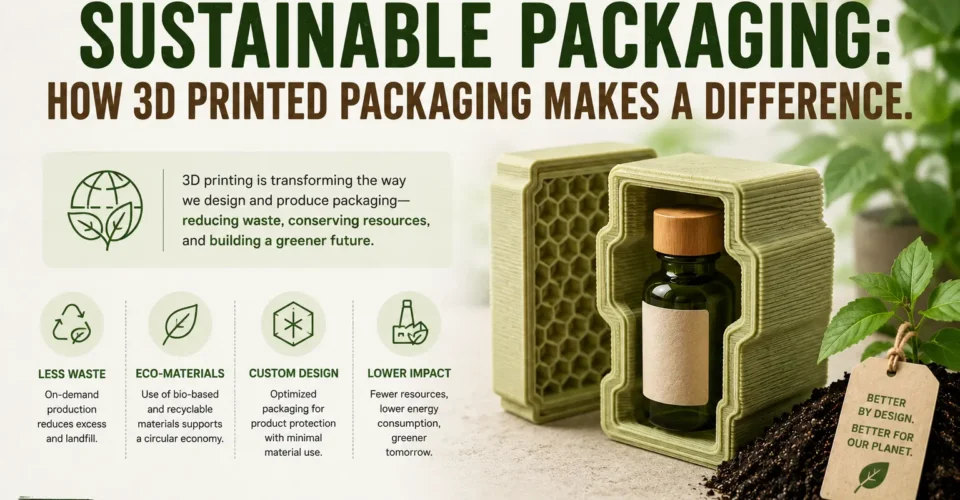
3D printed packaging is created using additive manufacturing technology. Unlike traditional manufacturing methods that cut, mold, or shape materials by removing excess material, 3D printing builds packaging layer by layer based on digital designs.
This process allows manufacturers to produce highly customized packaging with exceptional accuracy while using only the materials required for production.
The result is a packaging solution that reduces waste, increases efficiency, and supports sustainable manufacturing practices.
How 3D Printing Reduces Material Waste
One of the biggest environmental advantages of 3D printed packaging is waste reduction.
Traditional packaging production often generates scrap materials during cutting, trimming, and shaping processes. These leftover materials frequently end up in landfills or require additional recycling processes.
With additive manufacturing:
- Material is deposited only where needed
- Excess waste is minimized
- Production errors are reduced
- Prototype development becomes more efficient
By eliminating unnecessary material consumption, businesses can lower costs and reduce environmental impact simultaneously.
Optimized Packaging Designs for Sustainability
3D printing enables designers to create packaging structures that are both lightweight and durable.
Using advanced design software, manufacturers can develop packaging that:
- Uses less raw material
- Maintains product protection
- Improves structural efficiency
- Reduces shipping weight
Lighter packaging requires less fuel during transportation, contributing to lower greenhouse gas emissions throughout the supply chain.
Supporting On-Demand Production
Traditional packaging manufacturing often requires large production runs to remain cost-effective. This can lead to excess inventory and unnecessary waste if packaging becomes outdated or demand changes.
3D printing supports on-demand manufacturing by allowing businesses to produce packaging only when needed.
Benefits include:
- Reduced inventory waste
- Lower storage requirements
- Faster design modifications
- Greater production flexibility
This approach aligns closely with modern sustainability principles by preventing overproduction and resource waste.
Enabling the Use of Sustainable Materials
Advancements in 3D printing technology have expanded the range of environmentally friendly materials available for packaging production.
Many 3D printing applications now utilize:
- Recycled plastics
- Biodegradable polymers
- Plant-based materials
- Compostable alternatives
These materials help businesses reduce their dependence on traditional petroleum-based packaging while supporting circular economy initiatives.
Faster Prototyping Means Less Waste
Packaging development often involves multiple design revisions before reaching a final product.
Traditional prototyping methods can consume significant amounts of material and time. In contrast, 3D printing enables rapid prototyping, allowing designers to test and refine packaging concepts quickly.
This process helps:
- Reduce development waste
- Improve packaging performance
- Accelerate innovation
- Lower overall resource consumption
Companies can achieve better results with fewer materials and less environmental impact.
Customization Without Environmental Costs
Consumers increasingly expect personalized products and packaging experiences. Traditional customization methods often require separate molds, tooling, and production setups, increasing resource consumption.
3D printing allows businesses to create customized packaging designs directly from digital files without extensive manufacturing changes.
This capability enables:
- Personalized packaging
- Limited-edition designs
- Brand-specific packaging solutions
- Short-run production without excessive waste
As a result, businesses can deliver unique customer experiences while maintaining sustainability objectives.
Challenges of 3D Printed Packaging
Although 3D printed packaging offers numerous sustainability benefits, some challenges remain.
These include:
- Higher costs for large-scale production
- Limited material availability in certain applications
- Slower manufacturing speeds compared to mass production methods
However, ongoing technological advancements continue to improve efficiency and affordability, making 3D printed packaging increasingly accessible to businesses of all sizes.
The Future of Sustainable Packaging
As environmental regulations become stricter and consumer demand for eco-friendly products continues to grow, 3D printed packaging is expected to play an increasingly important role in the packaging industry.
Future developments may include:
- More biodegradable printing materials
- Enhanced recycling capabilities
- Improved production speeds
- Greater design flexibility
- Reduced manufacturing energy consumption
These innovations will help businesses meet sustainability goals while delivering high-quality packaging solutions.
Why Sustainable Packaging Matters for Modern Brands
Sustainable packaging is no longer just a trend—it has become a business necessity. Consumers actively support brands that demonstrate environmental responsibility and transparency.
By adopting innovative packaging technologies, companies can:
- Improve brand reputation
- Reduce operational waste
- Meet sustainability targets
- Appeal to environmentally conscious customers
- Gain a competitive advantage
At Custom Boxes BL, we recognize the growing importance of sustainable packaging solutions. As packaging technology evolves, businesses that embrace innovation will be better positioned to meet future market demands while supporting environmental stewardship.
Final Thoughts
The science behind sustainable packaging continues to evolve, and 3D printed packaging represents one of the most promising innovations in the industry. Through waste reduction, optimized design, on-demand production, and eco-friendly materials, this technology offers businesses a practical pathway toward greater sustainability.
While challenges remain, the long-term potential of 3D printed packaging is clear. As more companies prioritize environmental responsibility, additive manufacturing will continue to shape the future of packaging, helping brands reduce their environmental impact while delivering smarter, more efficient packaging solutions.