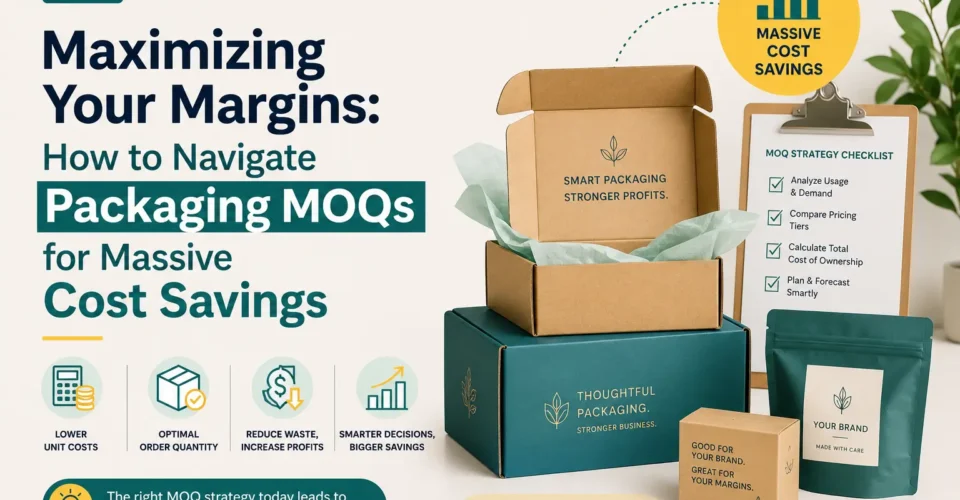
Maximizing Your Margins: How to Navigate Packaging MOQs for Massive Cost Savings
Packaging costs can significantly impact a company’s profitability, especially for businesses that rely on custom packaging to strengthen their brand image. While many brands focus on design and material selection, one factor often overlooked is the Minimum Order Quantity (MOQ). Understanding how packaging MOQs work can help businesses reduce costs, improve inventory management, and maximize profit margins.
Whether you’re a startup or an established brand, learning to navigate packaging MOQs strategically can unlock substantial savings without compromising quality.
At Custom Boxes BL, businesses can access custom packaging solutions that balance affordability, quality, and scalability for long-term growth.
What Are Packaging MOQs?
MOQ, or Minimum Order Quantity, refers to the smallest number of packaging units a manufacturer is willing to produce in a single order.
Packaging suppliers set MOQs to cover production costs, materials, setup fees, and labor expenses. The higher the order quantity, the lower the cost per unit generally becomes.
For example, ordering 10,000 custom boxes may result in a significantly lower per-unit cost than ordering 1,000 boxes because production expenses are spread across a larger quantity.
Understanding this principle is key to making smarter purchasing decisions.
Why MOQs Matter for Profit Margins
Packaging expenses directly affect product profitability. Businesses that fail to plan packaging orders efficiently may end up paying higher unit costs or tying up excessive capital in inventory.
Managing MOQs effectively helps companies:
- Reduce packaging costs
- Improve cash flow
- Increase profit margins
- Avoid unnecessary inventory expenses
- Strengthen supply chain efficiency
A well-planned packaging strategy can generate meaningful savings over time.
Understand Your Packaging Demand
Before placing large packaging orders, businesses should accurately evaluate their sales volume and demand forecasts.
Consider:
- Monthly sales trends
- Seasonal fluctuations
- Product launch schedules
- Marketing campaigns
- Inventory turnover rates
Ordering too many boxes can create storage issues, while ordering too few may result in frequent reorders at higher costs.
Demand forecasting helps businesses find the right balance between cost savings and inventory management.
Take Advantage of Volume Discounts
One of the biggest benefits of higher MOQs is access to lower per-unit pricing.
Packaging manufacturers often offer tiered pricing structures where costs decrease as order quantities increase.
For example:
| Order Quantity | Cost Per Unit |
|---|---|
| 1,000 Boxes | Higher |
| 5,000 Boxes | Lower |
| 10,000 Boxes | Lowest |
Although larger orders require a higher upfront investment, the long-term savings can significantly improve overall margins.
Businesses should compare unit costs at different quantity levels before making purchasing decisions.
Standardize Packaging Designs
Frequent packaging redesigns can increase production costs and reduce purchasing flexibility.
Brands can save money by standardizing packaging dimensions and structural designs across multiple products.
Benefits include:
- Lower production costs
- Easier inventory management
- Reduced setup fees
- Greater purchasing power
Consistent packaging also strengthens brand recognition and simplifies fulfillment operations.
Optimize Packaging Materials
Choosing the right material is essential for controlling costs without sacrificing quality.
Popular cost-effective packaging materials include:
Corrugated Cardboard
Durable and ideal for shipping products safely.
Folding Cartons
Affordable and highly customizable for retail packaging.
Kraft Packaging
Eco-friendly, lightweight, and increasingly popular among modern brands.
Material optimization can lower production expenses while maintaining product protection and visual appeal.
Balance Cost Savings with Storage Costs
While ordering larger quantities often reduces unit prices, businesses must also consider storage expenses.
Excess inventory may lead to:
- Warehouse costs
- Product obsolescence
- Packaging design updates
- Inventory management challenges
The goal is to find an order quantity that maximizes savings without creating unnecessary storage burdens.
Smart inventory planning is just as important as securing lower packaging prices.
Build Long-Term Supplier Relationships
Strong relationships with packaging suppliers can create opportunities for better pricing and more flexible MOQ requirements.
Long-term partnerships often provide:
- Preferential pricing
- Faster production times
- Better communication
- Greater customization options
- Flexible reorder arrangements
Businesses that maintain consistent order volumes often gain negotiating advantages over time.
Companies working with trusted providers like Custom Boxes BL can benefit from reliable packaging solutions tailored to their operational needs.
Consider Future Growth
Packaging decisions should support not only current demand but also future expansion.
Businesses expecting growth may benefit from larger packaging orders that lock in lower costs before demand increases.
Planning ahead allows brands to:
- Secure better pricing
- Avoid supply shortages
- Improve production efficiency
- Support scaling operations
Forward-thinking packaging strategies often contribute to stronger long-term profitability.
Leverage Custom Packaging Strategically
Custom packaging should deliver value beyond product protection. Well-designed packaging can improve customer experience, increase perceived product value, and strengthen branding efforts.
When evaluating packaging investments, consider how custom packaging contributes to:
- Brand recognition
- Customer retention
- Product differentiation
- Marketing effectiveness
The return generated through stronger branding often offsets packaging costs over time.
Common MOQ Mistakes to Avoid
Many businesses lose money by making avoidable packaging purchasing mistakes.
Common errors include:
Ordering Based Only on Unit Price
The lowest unit cost isn’t always the most profitable option if inventory sits unused.
Ignoring Demand Forecasts
Poor sales projections can result in excess packaging inventory.
Frequent Design Changes
Constant packaging updates can increase costs and create waste.
Choosing the Wrong Supplier
Low-cost suppliers may compromise quality, lead times, or reliability.
Avoiding these mistakes helps businesses maximize the value of every packaging investment.
The Future of Packaging Procurement
As supply chains evolve, businesses are becoming more strategic in how they manage packaging purchases.
Emerging trends include:
- Sustainable packaging materials
- Digital printing for smaller runs
- Flexible MOQ options
- Smart inventory management
- Data-driven demand forecasting
Companies that adapt to these trends can improve efficiency while maintaining healthy profit margins.