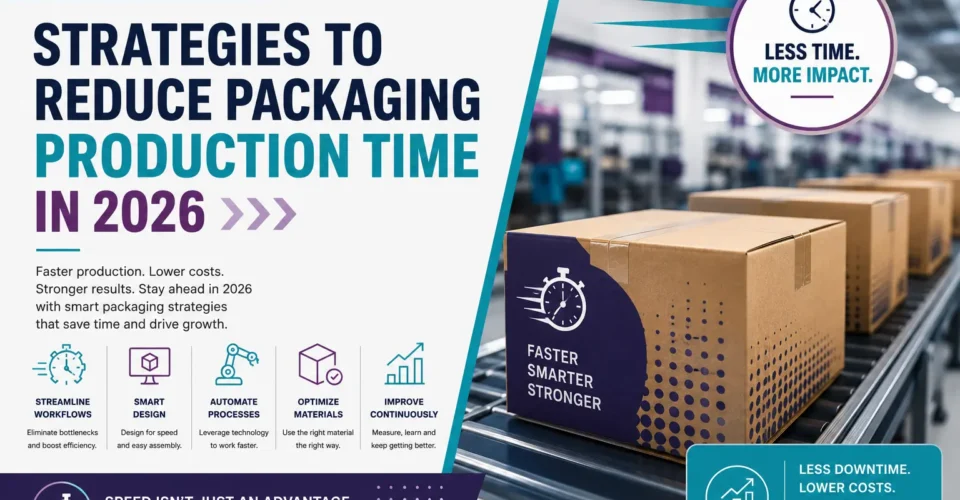
The Need for Speed: Strategies to Reduce Packaging Production Time in 2026
In 2026, speed has become a critical competitive advantage in the packaging industry. Consumers expect faster deliveries, businesses demand shorter lead times, and supply chains continue to evolve at a rapid pace. As a result, companies can no longer afford lengthy packaging production cycles that delay product launches or disrupt inventory management.
Reducing packaging production time is not simply about working faster—it requires smarter planning, efficient processes, advanced technology, and strong supplier relationships. Businesses that streamline packaging operations can improve customer satisfaction, reduce costs, and respond more quickly to market demands.
At Custom Boxes BL, businesses can access custom packaging solutions designed to support efficiency without compromising quality or branding.
Why Faster Packaging Production Matters
Packaging delays can create a chain reaction across an entire business operation. Slow production can impact inventory levels, postpone product launches, and increase operational costs.
Faster packaging production helps businesses:
- Meet customer expectations
- Improve supply chain efficiency
- Reduce inventory shortages
- Accelerate product launches
- Increase profitability
- Stay competitive in fast-moving markets
In 2026, brands that prioritize speed are better positioned to adapt to changing consumer demands and industry trends.
Simplify Packaging Designs
Complex packaging often requires additional manufacturing steps, which increases production time. While creative designs can enhance branding, overly complicated structures may slow down production and fulfillment.
Businesses can improve efficiency by:
- Reducing unnecessary design elements
- Standardizing box dimensions
- Using simpler structural designs
- Limiting excessive finishing techniques
A clean, professional design often delivers both visual appeal and production efficiency.
Standardize Packaging Across Product Lines
Many businesses use multiple packaging formats for similar products. While customization is important, excessive variation can increase setup times and production complexity.
Standardized packaging helps:
- Reduce manufacturing adjustments
- Speed up production workflows
- Lower material waste
- Improve inventory management
Companies that use consistent packaging formats often achieve faster turnaround times and lower operational costs.
Invest in Digital Printing Technology
Digital printing continues to transform the packaging industry. Unlike traditional printing methods, digital printing requires minimal setup and allows businesses to produce packaging more quickly.
Benefits include:
- Faster production runs
- Shorter setup times
- Improved design flexibility
- Reduced material waste
- Faster design revisions
For brands that frequently update packaging or launch seasonal products, digital printing offers a significant advantage.
Improve Communication with Packaging Suppliers
Production delays often occur due to miscommunication between businesses and packaging manufacturers.
To streamline production, companies should provide:
- Clear design specifications
- Accurate dimensions
- Approved artwork files
- Realistic production schedules
Strong communication reduces revisions, prevents errors, and keeps projects moving efficiently.
Working with experienced providers like Custom Boxes BL can help businesses avoid unnecessary delays and maintain consistent production timelines.
Plan Packaging Requirements in Advance
Last-minute packaging orders often lead to rushed production schedules and higher costs.
Businesses can reduce delays by forecasting packaging needs based on:
- Sales trends
- Seasonal demand
- Product launches
- Marketing campaigns
Advance planning allows suppliers to allocate resources efficiently and ensure packaging materials are available when needed.
Optimize Material Selection
Certain packaging materials require longer production and finishing times than others. Choosing practical materials can help accelerate manufacturing without sacrificing quality.
Popular time-efficient materials include:
Corrugated Cardboard
Strong, reliable, and widely available for shipping and retail packaging.
Folding Cartons
Lightweight and easy to produce in large quantities.
Kraft Packaging
Simple, sustainable, and increasingly popular for modern brands.
Selecting the right material can significantly improve production speed and reduce supply chain bottlenecks.
Automate Packaging Processes
Automation continues to play a major role in packaging production. Modern packaging facilities use automated systems to improve efficiency and reduce manual labor requirements.
Automation can support:
- Cutting and die-cutting
- Printing processes
- Folding and assembly
- Quality control inspections
- Packaging fulfillment
Automated production systems help businesses meet tighter deadlines while maintaining consistent quality standards.
Reduce Approval Bottlenecks
One of the most common causes of packaging delays is prolonged approval processes.
Businesses can accelerate production by establishing clear approval procedures for:
- Packaging designs
- Artwork revisions
- Material selections
- Production samples
Quick decision-making helps prevent unnecessary production interruptions and keeps projects on schedule.
Build Long-Term Supplier Partnerships
Reliable supplier relationships are essential for maintaining efficient packaging production.
Long-term partnerships often provide:
- Priority production scheduling
- Faster response times
- Better communication
- Consistent quality
- Improved lead-time management
Trusted suppliers understand business requirements and can respond more effectively during peak demand periods.
Leverage Data and Forecasting Tools
In 2026, data-driven decision-making is becoming essential for supply chain management.
Forecasting tools help businesses:
- Predict packaging demand
- Monitor inventory levels
- Prevent stock shortages
- Optimize purchasing decisions
Accurate forecasting reduces emergency orders and supports smoother production planning throughout the year.
Embrace Sustainable Efficiency
Sustainability and speed are no longer separate goals. Modern packaging solutions focus on reducing waste while improving production efficiency.
Sustainable packaging strategies include:
- Recyclable materials
- Lightweight packaging designs
- Reduced material usage
- Efficient production methods
These practices help businesses lower costs while meeting growing consumer demand for environmentally responsible packaging.
The Future of Packaging Production
As technology continues to evolve, packaging production is becoming faster, smarter, and more flexible.
Key trends shaping the future include:
- AI-driven production planning
- Digital printing advancements
- Smart inventory management
- Automated manufacturing systems
- Sustainable packaging innovations
Businesses that embrace these developments will be better equipped to meet customer expectations and maintain a competitive edge.
Final Thoughts
In today’s fast-paced market, reducing packaging production time is essential for operational success. By simplifying designs, adopting automation, improving supplier collaboration, and leveraging modern technology, businesses can shorten lead times while maintaining quality and brand consistency.
Speed is no longer just a convenience—it is a strategic advantage that directly impacts customer satisfaction, profitability, and growth.
With efficient and scalable packaging solutions from Custom Boxes BL, businesses can streamline production processes and stay ahead in the evolving packaging landscape.