Complete Guide on How to Make a Display Box
Introduction
Display boxes play a crucial role in modern retail marketing. They are designed not only to protect products but also to attract customers and increase sales. Whether you own a small business, run a retail store, or sell products online, custom display boxes can help your brand stand out in a competitive marketplace.
From cosmetics and food items to electronics and promotional products, display packaging is widely used to showcase merchandise in an organized and appealing manner. In this complete guide, we will walk you through everything you need to know about making a display box, including materials, design considerations, manufacturing steps, and customization options.
What Is a Display Box?
A display box is a specially designed packaging solution used to present products attractively on retail shelves, countertops, or promotional displays. Unlike standard packaging, display boxes feature an open-front structure that allows customers to easily view and access products.
Businesses use custom display boxes to:
- Enhance product visibility
- Improve brand recognition
- Encourage impulse purchases
- Organize products neatly
- Create an attractive shopping experience
Benefits of Using Display Boxes
Increased Product Visibility
Display boxes place products directly in front of customers, making them easier to notice. Eye-catching designs and branding elements help draw attention in busy retail environments.
Better Brand Awareness
Custom printed display boxes allow businesses to showcase logos, brand colors, and marketing messages. Consistent branding improves customer recognition and trust.
Cost-Effective Marketing
Display packaging acts as a silent salesperson. It promotes products without requiring additional advertising costs.
Improved Product Organization
Retail display boxes keep products arranged neatly, reducing clutter and enhancing the overall appearance of store shelves.
Enhanced Customer Experience
A well-designed display box makes products more accessible, helping customers browse and make purchasing decisions quickly.
Types of Display Boxes
Before creating a display box, it is important to choose the right style for your products.
Counter Display Boxes
These compact boxes are placed near checkout counters and are ideal for small items such as candies, cosmetics, supplements, and accessories.
Floor Display Boxes
Floor displays are larger structures used for promotional campaigns and high-volume product presentations.
Shelf Display Boxes
Designed specifically for retail shelves, these boxes maximize space while keeping products visible.
Pop-Up Display Boxes
Pop-up displays feature creative structures and unique designs that instantly attract customer attention.
Corrugated Display Boxes
Made from durable corrugated cardboard, these boxes are ideal for heavier products and long-term retail use.
Materials Required to Make a Display Box
The quality of materials directly affects the strength and appearance of the display box.
Cardboard
Cardboard is one of the most commonly used materials due to its affordability and versatility.
Benefits include:
- Lightweight
- Eco-friendly
- Easy customization
- Cost-effective
Corrugated Board
Corrugated material offers superior durability and protection.
Advantages include:
- High strength
- Excellent product support
- Suitable for shipping and display purposes
Kraft Paperboard
Kraft packaging is a sustainable option preferred by environmentally conscious brands.
Benefits include:
- Recyclable
- Biodegradable
- Natural appearance
- Strong structure
Rigid Board
Rigid materials provide a premium feel and are often used for luxury product displays.
Tools Needed
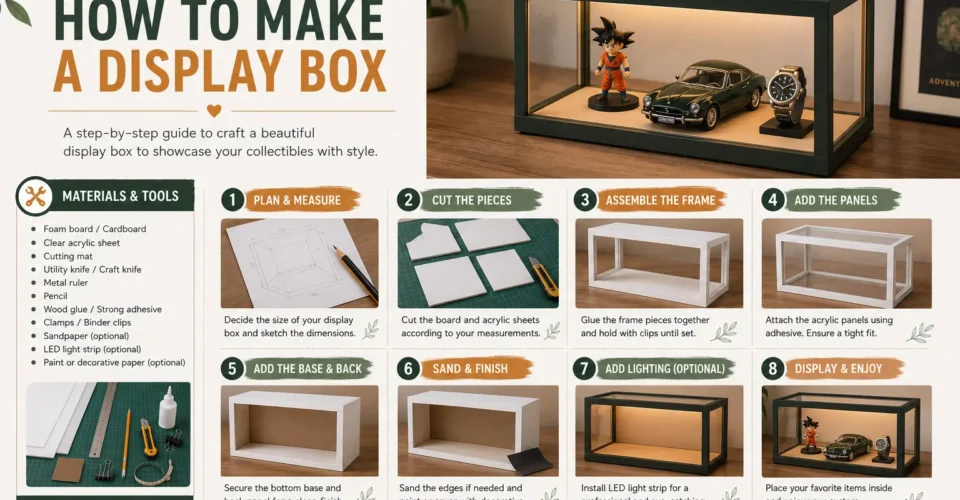
To create a display box, you will need:
- Measuring ruler
- Pencil
- Cutting knife
- Scissors
- Adhesive or glue
- Cardboard sheets
- Printing materials
- Design template
Step-by-Step Guide to Making a Display Box
Step 1: Determine Product Dimensions
Measure the length, width, and height of the product that will be placed inside the display box.
Accurate measurements ensure:
- Proper product fit
- Better presentation
- Reduced material waste
Step 2: Create a Display Box Template
Design a dieline or template based on your product dimensions.
A standard template includes:
- Front panel
- Back panel
- Side walls
- Bottom panel
- Folding flaps
Professional packaging companies often use CAD software to create precise templates.
Step 3: Choose the Material
Select the appropriate material according to product weight and display requirements.
For example:
- Lightweight products: Cardboard
- Heavy products: Corrugated board
- Premium products: Rigid packaging
Step 4: Print the Design
Add branding elements such as:
- Company logo
- Product information
- Taglines
- Promotional graphics
- QR codes
High-quality printing techniques include:
- Digital printing
- Offset printing
- Flexographic printing
Step 5: Cut the Template
Use cutting equipment or a precision knife to cut the printed template according to the dieline.
Ensure all edges are smooth and accurate.
Step 6: Score and Fold
Scoring creates crease lines that make folding easier and more precise.
Fold all panels carefully to achieve a clean structure.
Step 7: Assemble the Box
Apply adhesive to designated flaps and assemble the display box.
Check for:
- Proper alignment
- Structural stability
- Smooth folding
Step 8: Add Finishing Touches
Enhance the appearance of the display box with premium finishing options such as:
- Gloss coating
- Matte lamination
- Spot UV
- Embossing
- Debossing
- Foil stamping
Design Tips for Effective Display Boxes
Focus on Branding
Your logo and brand colors should be clearly visible from a distance.
Use High-Quality Graphics
Professional images and graphics increase customer engagement.
Keep Messaging Simple
Use concise and impactful text to communicate product benefits quickly.
Choose Attractive Colors
Color psychology plays an important role in purchasing decisions.
Prioritize Product Visibility
Ensure the display structure does not obstruct the product itself.
Common Mistakes to Avoid
Incorrect Measurements
Poor sizing can result in unstable packaging and product damage.
Overcrowded Designs
Too much text or graphics can overwhelm customers.
Weak Materials
Using low-quality materials may compromise durability.
Ignoring Retail Requirements
Different retailers may have specific packaging guidelines.
Eco-Friendly Display Box Solutions
Sustainability has become a major priority for modern businesses.
Environmentally friendly display boxes can be made using:
- Recycled cardboard
- Kraft paper
- Water-based inks
- Biodegradable coatings
Benefits include:
- Reduced environmental impact
- Positive brand image
- Increased customer loyalty
Why Choose Custom Display Boxes?
Custom display packaging provides businesses with complete control over:
- Size
- Shape
- Design
- Branding
- Finishing options
Customized solutions help products stand out and create memorable shopping experiences.
At Custom Boxes BL, businesses can create tailor-made display boxes that perfectly match their products and branding goals.
Industries That Use Display Boxes
Many industries rely on retail display packaging, including:
Food and Beverage
Used for snacks, candies, beverages, and promotional products.
Cosmetics
Perfect for showcasing skincare, makeup, and beauty products.
Pharmaceuticals
Ideal for supplements, healthcare items, and over-the-counter products.
Electronics
Used to display accessories, chargers, and gadgets.
Retail and E-Commerce
Supports product launches, seasonal promotions, and in-store marketing campaigns.
Why Custom Boxes BL Is Your Trusted Packaging Partner
Custom Boxes BL specializes in designing high-quality custom display boxes tailored to your business needs. Our packaging experts combine creativity, durability, and innovative printing solutions to create packaging that attracts customers and drives sales.
We offer:
- Custom sizes and styles
- Premium printing options
- Eco-friendly materials
- Fast turnaround times
- Competitive pricing
- Professional design support
Whether you need countertop displays, retail shelf boxes, or promotional packaging, Custom Boxes BL delivers packaging solutions that help your products make a lasting impression.
Conclusion
Creating a display box involves more than simply folding cardboard. A successful display box combines structural integrity, attractive design, effective branding, and customer convenience. By selecting the right materials, following proper design principles, and investing in quality customization, businesses can create display packaging that enhances product visibility and increases sales.
If you are looking for professionally crafted custom display boxes, Custom Boxes BL offers innovative packaging solutions designed to elevate your brand and maximize retail performance. Contact our team today to create display packaging that turns shoppers into loyal customers.